Our Blog

What is a water pick and do I need one?

April 19th, 2016
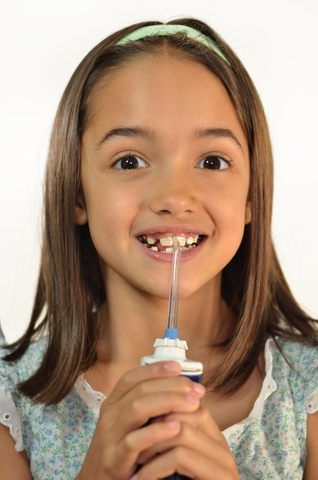
Water picks, sometimes called “oral irrigators,” make an excellent addition to your regular home care regimen of brushing and flossing. Especially helpful to those who suffer from periodontal disease and those patients of ours undergoing orthodontic treatment with full-bracketed braces, water picks use powerful tiny bursts of water to dislodge food scraps, bacteria, and other debris nestled in the crevices of your mouth. Children undergoing orthodontic treatment may find using a water pick is beneficial if their toothbrush bristles tend to get caught on their wires or brackets.

When you use a water pick, you’re not only dislodging any particles or debris and bacteria you might have missed when brushing, you are also gently massaging the gums, which helps promote blood flow in the gums and keeps them healthy. While water picks are an excellent addition to your daily fight against gingivitis and other periodontal diseases, they are incapable of fully removing plaque, which is why Dr. Werner and our team at Erich M. Werner, D.D.S. want to remind you to keep brushing and flossing every day.

If you have sensitive teeth or gums and find it uncomfortable to floss daily, water picks are a good alternative to reduce discomfort while effectively cleaning between teeth. Diabetics sometimes prefer water picks to flossing because they don't cause bleeding of the gums, which can be a problem with floss. If you have a permanent bridge, crowns, or other dental restoration, you may find that a water pick helps you keep the area around the restorations clean.

So how do you choose the right water pick?

Water picks are available for home or portable use. The home versions tend to be larger and use standard electrical outlets, while portable models use batteries. Aside from the size difference, they work in the same manner, both using pulsating water streams. A more crucial difference between water picks is the ability to adjust the pressure. Most home models will let you choose from several pressure settings, depending on how sensitive your teeth and gums are. Most portable models have only one pressure setting. If you want to use mouthwash or a dental rinse in your water pick, check the label first; some models suggest using water only.

Please give us a call at our Los Gatos, CA office if you have any questions about water picks, or ask Dr. Werner during your next visit!

Three Signs You May Have Gingivitis

April 12th, 2016

Gingivitis, or inflammation of the gums, is an early stage of gum disease. If you have gingivitis, it’s important to visit Dr. Werner to get proper treatment, since home care isn’t enough to get rid of the plaque that leads to tartar and eventually to gum disease. Monitor yourself to see if you have these signs of gingivitis, and get help as soon as you can to prevent the progression to periodontitis. Your vigilance could save your teeth.

1. You have one or more risk factors.

Having risk factors for gingivitis doesn’t mean that you have or will get the disease, but it does mean that you should be especially watchful. You’re more likely to get gum disease if you have the following risk factors:

  • You are a smoker.
  • You are a female going through puberty, pregnancy, or menopause.
  • You have diabetes.
  • You have a compromised immune system, as is the case if you have HIV/AIDS.
  • You have a family history of gum disease.

2. You have inflammation in your gums.

Gingivitis is inflammation of the gums, and that is a tell-tale sign of the condition. Gingivitis or periodontitis can involve a bacterial infection, and inflammation is your body’s response to an injury or infection. The four standard signs of inflammation are pain, redness, swelling, and a higher temperature than normal.

If you have inflammation around your teeth, your gum disease may have progressed to the more serious condition of periodontitis. Dr. Werner can evaluate your case using a scope, or small ruler. The ruler is used to measure the pockets around your teeth, with a depth of one to three millimeters being normal.

3. Your teeth seem to be moving around.

Loose teeth are a classic sign of periodontitis. You may also have them if you have gingivitis. They can occur when your gum line recedes, or as the result of having soft bone in your jaw.

You might also notice other signs of your teeth moving around. For example, they may seem to be oddly spaced, or they could be separating from each other. You might also notice that your partial dentures don’t fit properly anymore, even if they’re not that old.

Gingivitis is a very treatable condition, but you need the help of Dr. Werner to keep it in check. Contact our Los Gatos, CA office to schedule an exam today!

Four Tips for Soothing a Toothache

April 5th, 2016

Whether it’s a dull and throbbing ache or a sharp pain, toothaches can come in many different forms. Chances are you’ve had the discomforting experience once or twice in your life. It’s the type of experience that nobody wants to have, because a toothache can be as annoying as fingernails scratching a chalkboard.

What’s a good way to describe a toothache? Let’s see … your mouth feels as if it’s being besieged by one of those Loony Tunes-style jackhammers. As fate would have it, toothaches always seem to occur over the weekend or after-office hours, leaving you to suffer and forcing you to cancel your reservation at that high-end restaurant you’ve been anticipating all week.

Not so fast!

While you’re probably going to want to skip the rib-eye steak, there are numerous tried-and-true home remedies you can use to ease the pain until you can make an appointment with our office. Here’s a look at four ways to soothe a toothache.

  1. Don’t underestimate the power of salt water. Rinsing your mouth with warm salt water will both soothe your toothache and disinfect your mouth. However, make sure the water is warm; cold water can further exacerbate a sensitive tooth. Follow up the saltwater rinse by swishing your mouth with hydrogen peroxide.
  2. Clove oil, eucalyptus oil, peppermint oil, and vanilla extract are proven to be comforting elixirs. Dip a cotton swab in one of these mixtures and apply it to your tooth and gums. These substances, which you may even have in your kitchen cupboards, are known to have pain-relieving qualities. For the best results, repeat the application throughout the day.
  3. Eating yogurt is good for toothaches and mouth pain. Yogurt is filled with healthy bacteria that combat pain. Afterward, place a cold compress on your jaw.
  4. Try flossing. Your toothache might be throbbing and severe, but there’s always a chance the pain is caused by a piece of food awkwardly lodged in your teeth.

We hope that helps! Give Erich M. Werner, D.D.S. a call to learn more!

Is there a connection between oral health and school performance?

March 29th, 2016

As a parent, you want the best for your children, and that includes doing their best in school. You can support them by taking an interest in their activities, being enthusiastic about attendance, and helping them with homework. There may also be one more way you can help your children succeed at school. Surprisingly, research suggests that children with better oral health are likely to do better in school.

What the Research Says

One study in North Carolina looked at risk factors for poor school performance among school-aged children. As expected, the study found poor school performance linked to low socioeconomic status, low levels of parental education, and poor overall health. However, it also found a strong link between poor oral health and poor school performance, with children classified as having poor oral health 40 percent more likely struggle in school.

These findings are generalizable to the rest of the country. For example, attendance is an important factor in academic achievement, but dental conditions are responsible for a loss 51 million school hours among schoolchildren each year. Dental pain and infection are linked to poorer performance.

School-Based Programs to Promote Oral Health

In light of the apparent benefits of good oral health for school performance, some schools are taking steps to promote better oral care and health. In Maine, for instance, schools in need can apply for grants through School Oral Health Program (SOHP). The SOHP consists of four components:

  1. Oral health education for all children to support healthy behaviors
  2. A weekly fluoride mouth rinse to strengthen teeth
  3. Dental screenings to identify children who may need dental care
  4. Dental sealants, or plastic coatings, on back teeth to guard against decay

The State of Maine also supports an “Annual Sugar Out Day” to raise awareness of the effects of sugar on dental health and to help students choose low-sugar alternatives.

Oral Health Habits to Adopt

You can help your child improve oral health and do better in school by encouraging good oral hygiene. This includes brushing at least twice a day with a fluoride-containing toothpaste, and reminding your child to drink water after eating. Also, regular trips to our Los Gatos, CA office can help prevent serious tooth problems.