Our Blog

Wishing all our moms a happy Mother’s Day!

May 7th, 2014

"Motherhood: All love begins and ends there." - Robert Browning

We would like to take this moment to thank all the great moms out there for being so great during their child’s visits to Erich M. Werner, D.D.S.. Whether it’s driving their kids to regularly scheduled appointments or for “being there” while their child is treatment, the moms who come to our office are all stellar individuals, so Dr. Werner and our entire staff would like you to know that we appreciate you all!

Happy Mother’s Day and enjoy your special day!

Invisalign® Q&A

April 30th, 2014

It’s estimated that up to four million people at any one time are wearing braces in the United States and Canada. But Dr. Werner and our team at Erich M. Werner, D.D.S. know that braces have come a long way from the early days of orthodontics, so much so that these days, options are available that are not visible to onlookers. The most popular of these “invisible” braces is Invisalign. Here’s a list of FAQs regarding Invisalign:

Are they really invisible?

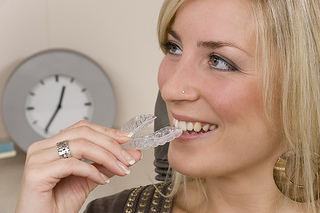
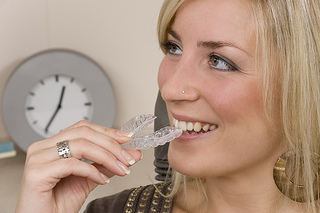
Yes, the clear liners are virtually invisible, so they enable patients to feel good about themselves and their appearance, while getting the orthodontic treatment they need.

Are there wires, rubber bands, and brackets with Invisalign?

Nope. Invisalign is truly an alternative to conventional braces. The treatment consists of clear liners that can easily be removed and cleaned throughout the day. There are no wires, so there’s less poking and mouth irritation compared to braces. There’s also no wire tightening at adjustment appointments, so patients don’t have to worry about a sore mouth in the days that follow in-office visits.

I’ve heard that if I get braces, I won’t be able to eat certain foods like popcorn and hard candy. Is this true with Invisalign too?

No. With Invisalign, there are no food restrictions. You simply remove your aligners when you’re eating, and replace them after you’ve finished and brushed any leftover food particles away.

Does Invisalign cost more than braces?

While overall cost varies on a patient-by-patient basis and is based largely on the level of treatment, Invisalign costs about the same as traditional braces, which makes this treatment option a truly affordable alternative.

How does brushing compare with conventional braces?

Brushing your teeth while wearing conventional braces takes some getting used to. Patients have to brush around the metal brackets and floss with a specialty tool to get into the hard-to-reach areas of the mouth. By contrast, Invisalign can be removed at any time to permit regular brushing and flossing.

Every patient is different and Invisalign might not be the best course of orthodontic treatment for everyone, but it's an option that's gaining more and more popularity, and it's an orthodontic alternative that doesn't sacrifice comfort and convenience for results. For more information, or to schedule a consultation, please give us a call at our convenient Los Gatos, CA office!


Invisalign® Q&A

April 30th, 2014

It’s estimated that up to four million people at any one time are wearing braces in the United States and Canada. But Dr. Werner and our team at Erich M. Werner, D.D.S. know that braces have come a long way from the early days of orthodontics, so much so that these days, options are available that are not visible to onlookers. The most popular of these “invisible” braces is Invisalign. Here’s a list of FAQs regarding Invisalign:

Are they really invisible?

Yes, the clear liners are virtually invisible, so they enable patients to feel good about themselves and their appearance, while getting the orthodontic treatment they need.

Are there wires, rubber bands, and brackets with Invisalign?

Nope. Invisalign is truly an alternative to conventional braces. The treatment consists of clear liners that can easily be removed and cleaned throughout the day. There are no wires, so there’s less poking and mouth irritation compared to braces. There’s also no wire tightening at adjustment appointments, so patients don’t have to worry about a sore mouth in the days that follow in-office visits.

I’ve heard that if I get braces, I won’t be able to eat certain foods like popcorn and hard candy. Is this true with Invisalign too?

No. With Invisalign, there are no food restrictions. You simply remove your aligners when you’re eating, and replace them after you’ve finished and brushed any leftover food particles away.

Does Invisalign cost more than braces?

While overall cost varies on a patient-by-patient basis and is based largely on the level of treatment, Invisalign costs about the same as traditional braces, which makes this treatment option a truly affordable alternative.

How does brushing compare with conventional braces?

Brushing your teeth while wearing conventional braces takes some getting used to. Patients have to brush around the metal brackets and floss with a specialty tool to get into the hard-to-reach areas of the mouth. By contrast, Invisalign can be removed at any time to permit regular brushing and flossing.

Every patient is different and Invisalign might not be the best course of orthodontic treatment for everyone, but it's an option that's gaining more and more popularity, and it's an orthodontic alternative that doesn't sacrifice comfort and convenience for results. For more information, or to schedule a consultation, please give us a call at our convenient Los Gatos, CA office!
Hypersensitive Teeth

April 23rd, 2014

It is common to experience dentine hypersensitivity, with symptoms ranging from moderate to severe. Why does it happen and how do you know if this sensitivity is something to be concerned about? The first step is to determine the cause.

The most common cause of the sensitivity is exposure of the dentin. Dentin is the layer immediately surrounding the nerve of the tooth. It is alive and usually covered by the gum tissue. When gum recession is present hypersensitivity is common. Other contributors to temporary tooth hypersensitivity include teeth whitening and dental procedures such as fillings, periodontal treatment, and braces placement or adjustment. These are temporary and should be of no concern.

Permanent hypersensitivity, however, may require treatment. To understand the cause of sustained hypersensitivity, let us explain the structure of dentin and why it serves as a ‘hot spot’.

The dentin contains a large numbers of pores or tubes that run from the outside of the tooth to the nerve in the center. When dentin tubes are exposed, there is a direct connection between the mouth and dental pulp, which houses the nerve and blood supply of the tooth. External stimuli, such as mechanical pressure (tooth grinding or clenching - bruising the ligaments holding the teeth in place), temperature changes, as well as chemical stimuli (sweet–sour) are transmitted to the pain-sensitive dental pulp and activate nerve endings. A short and sharp pain is the result. These external stimuli cause fluid movement in the open tube that is transmitted as pain sensations. Something needs to be placed into the dentin tube to plug it and stop this fluid movement.

The first step in doing something about dental hypersensitivity is to determine the cause; our professional team at Erich M. Werner, D.D.S. can help you with this. Whether the sensitivity is due to exposed dentin or an underlying cause such as abscess or decay, corrective measures are needed. Contact us sooner rather than later so Dr. Werner can reduce the sensitivity, and provide you with some relief!